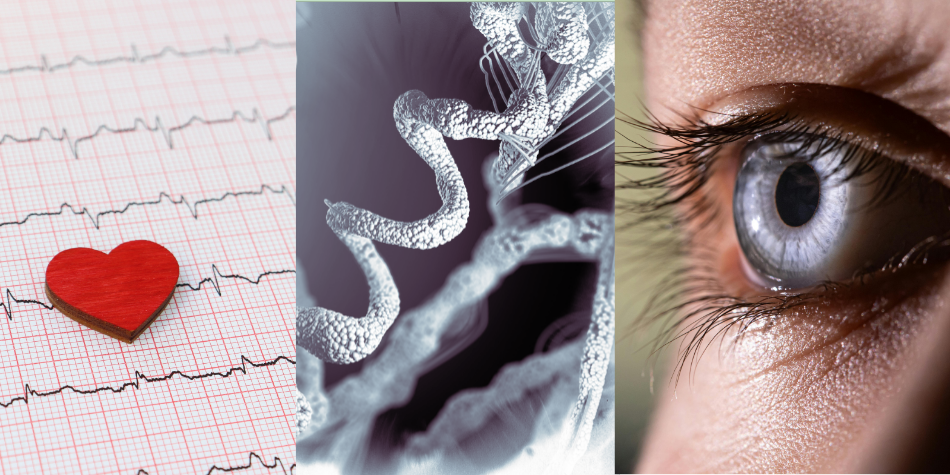
In laboratories, clinics and startup companies across Tennessee, innovators from the University of Tennessee (UT) are developing technologies that could transform how diseases are diagnosed and treated.
From artificial intelligence that can interpret the hidden signals inside a heartbeat to experimental drugs designed to overcome treatment-resistant cancers, these innovations are moving from university laboratories into the hands of clinicians and patients with support from the UT Research Foundation (UTRF).
“At UT Health Sciences and across the UT system, we see every day how health sciences researchers serve as a critical bridge between discovery and the people we are called to serve. What makes this work distinctive is not just the scientific rigor behind innovations, from AI-enabled diagnostics to novel medicines and other treatments, but the intentional focus we have on partnering with UTRF to translate those discoveries into solutions that reach Tennesseans wherever they live. At UT, our goal is ensuring that advances in science do not remain confined to the lab, but are delivered with impact, improving health outcomes for patients and families across our state and beyond,” said Jessica Snowden, MD, MS, MHPTT, UTRF board member and UT Health Science Center (UTHSC) vice chancellor for research.
Detecting Heart Disease Earlier with Artificial Intelligence
The journey toward better treatment often begins with an earlier diagnosis.
For nearly a century, the electrocardiogram (ECG) has been read the same way by trained eyes, by experience, by what the human mind can recognize – but what if there’s more than meets the eye?
This question inspired the creation of 9+1AI, a digital health startup developing artificial intelligence tools that analyze ECGs to detect cardiovascular disease earlier and more accurately.
Spun out of research collaborations involving the UTHSC College of Medicine – Memphis (UTHSC COM-Memphis) and Wake Forest School of Medicine, the technology recently received Breakthrough Device Designation from the U.S. Food and Drug Administration, a status reserved for technologies that may provide more effective diagnosis or treatment of life-threatening diseases.
Heart failure remains one of the most common and costly medical conditions in the United States, affecting millions of adults and often going undiagnosed until symptoms become severe.
“We believe the ECG holds far more information than clinicians have traditionally been able to extract,” said Dr. Robert Davis, MD, MPH, co-founder and chief medical officer of 9+1AI. “Artificial intelligence allows us to detect patterns in the signal that may reveal disease long before symptoms appear.”
Because the system can analyze ECG data from hospitals, clinics or wearable devices such as smartwatches, the technology could eventually support remote monitoring and telehealth – potentially enabling earlier treatment for millions of patients.
Removing the Proteins Behind a Rare and Deadly Disease
For patients with systemic amyloidosis, both diagnosis and treatment remain difficult – with around 80% of patients undiagnosed, and a short survival window driving an earlier need for diagnosis.
Amyloid diseases are a diverse group of disorders, characterized by the deposition of amyloid protein fibrils in vital organs and tissues. There are approximately 30 different types of amyloidosis, each resulting from the misfolding and aggregation of a specific protein, and they are all severely debilitating, progressive and often fatal.
Most current treatments slow the formation of amyloid but cannot remove the deposits that have already formed.
Attralus, a biopharmaceutical company launched with technology licensed by UTRF, is developing novel pan-amyloid removal therapeutics, a new class of biologic drugs designed to bind directly to amyloid deposits and eliminate them from tissues.
The company’s technology originated from decades of research led by Jonathan Wall, Ph.D., and his colleagues in the Amyloidosis and Cancer Theranostics Program, at the UTHSC COM-Knoxville and is now advancing both therapies and imaging radiotracers designed to improve diagnosis and treatment for amyloidosis patients worldwide.
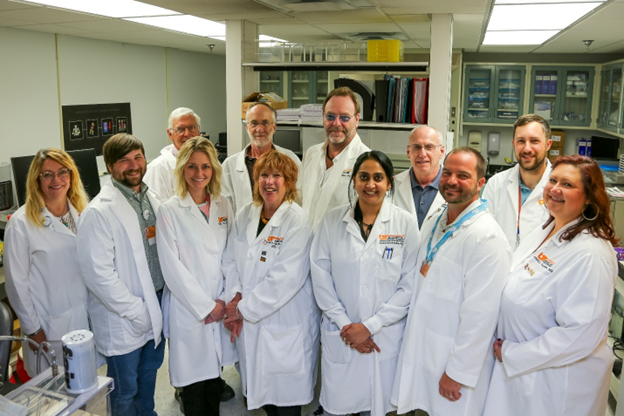
In 2026, Bayer acquired two investigational imaging agents developed by the Amyloidosis program – tools designed to improve the early diagnosis and monitoring of cardiac amyloidosis.
Advancing the Next Generation of RNA Medicines
Even when scientists identify promising therapies, delivering those treatments safely to the right cells remains a major challenge.
Orion Therapeutics, a Knoxville-based biotechnology company, is developing a proprietary non-viral delivery platform for RNA medicines. The company was co-founded by Trey Fisher, Ph.D., Orion’s president and CEO, and Deidra Mountain, Ph.D., a professor at the UTHSC COM-Knoxville and director of Orion’s Vascular Therapeutic Pipeline. Mountain served as Fisher’s former mentor and Ph.D. advisor, and the company’s core technology originated from university research led by Mountain and was advanced by Fisher during his doctoral training.
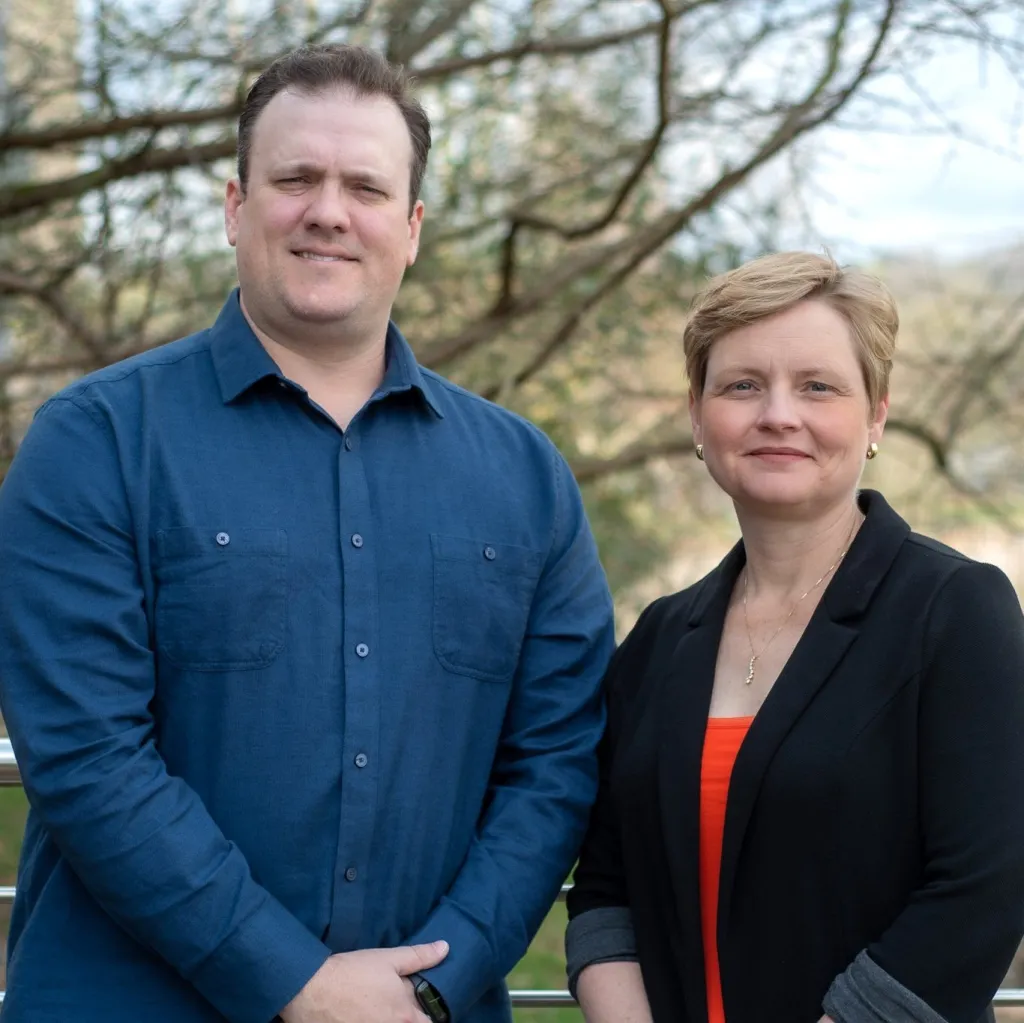
Supported by UTRF’s Accelerate Fund, which invest in UT startups at the pre-seed to seed stages of development, Orion is developing its GENESYS™ lipid nanoparticle delivery platform to enable safer, more effective delivery of RNA-based therapeutics. The company’s pipeline includes programs targeting vascular disease, with broader applications across RNA medicine. Orion is part of a growing wave of Tennessee life-science startups translating university research into scalable therapeutic platforms with the potential for significant clinical impact.
Improving the Tools Doctors Use
Even when treatments exist, the tools physicians use can influence how well patients heal.
Former Plough Foundation Professor at the UTHSC Hamilton Eye Institute, ophthalmologist Edward Chaum and engineers at Oak Ridge National Laboratory developed Plexitome, a surgical instrument designed to treat corneal abrasions and recurrent corneal erosion, conditions that affect more than one million patients each year.
The device contains hundreds of microscopic spikes engineered to create controlled punctures in the cornea. The design helps strengthen epithelial attachment and promote healing while minimizing scarring.
Traditional techniques can be inconsistent, but the device allows surgeons to create uniform patterns that may reduce recurrence and improve recovery.
“We designed the device to deliver precision and consistency,” Chaum said. “Ultimately, that means better outcomes for patients.”
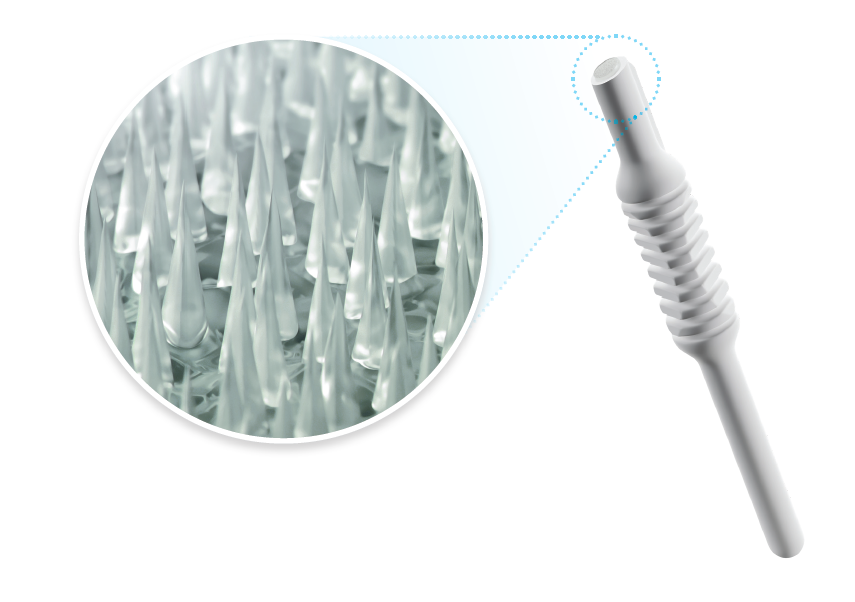
Licensed through UTRF, the technology is now being distributed for clinical use through VEO Ophthalmics.
New Paths for Treating Cancer and Infectious Disease
Across the UT system, researchers continue advancing discoveries that may lead to future therapies.
Innovators Duane Miller, Ph.D., Ramesh Narayanan, MS, MBA, Ph.D., and Lawrence Pfeffer, Ph.D., are developing experimental drugs to treat advanced prostate cancer and brain tumors – diseases that often develop resistance to existing treatments. Narayanan and Miller co-founded RAMiller LLC to develop the drugs discovered in their laboratories.
“I always tell my students that a doctor can change the life of one patient at a time, whereas if you are a drug discoverer, you can change the life of thousands or hundreds of thousands of people simultaneously,” said Narayanan.
Decades of research by James B. Dale, MD have advanced vaccine candidates aimed at preventing Group A streptococcal infections, which cause illnesses ranging from strep throat to rheumatic heart disease and remain a major global health burden.
Another UT innovator, Wei Li, Ph.D., is advancing drug discovery efforts for cancer and neurological diseases. Together with Miller, his research contributed to the development of sabizabulin, an investigational new drug currently in clinical trials for severe respiratory disease. His startup company, SEAK Therapeutics, is focusing on developing a new therapy for breast cancer patients with brain metastases.
These innovations demonstrate the breadth of biomedical research underway across the UT system, and the Universities’ commitment to serving Tennessee and beyond.
Turning Discovery into Real-World Solutions
Helping move these technologies from laboratory discoveries to real-world applications is the mission of UTRF.
“Universities generate extraordinary discoveries,” said Maha Krishnamurthy, Ph.D., MBA, UTRF president and CEO. “Our role is to ensure those discoveries don’t stop in the lab but ultimately reach the patients who need them.”
For UTHSC Chancellor Peter Buckley, MD, the growing pipeline of health innovations reflects the broader impact of the UT System.
“Researchers at UTHSC are deeply committed to improving human health,” Dr. Buckley said. “When our faculty develop technologies that detect disease earlier, treat patients more effectively or create entirely new therapies, those innovations can improve lives not just in Tennessee, but around the world.”