For nearly a century, the electrocardiogram (ECG) has helped clinicians understand the heart by analyzing its electrical activity. But what if more information could be extracted from the signal than the human eye can see?
That question is at the heart of 9+1AI, a digital health startup developing artificial intelligence tools that analyze ECGs to identify cardiovascular risk and disease earlier.
The company emerged from a research collaboration involving the University of Tennessee Health Sciences College of Medicine–Memphis (UTHS COM–Memphis) and Wake Forest School of Medicine. The technology recently received Breakthrough Device Designation from the U.S. Food and Drug Administration, a designation for certain medical devices that may provide more effective treatment or diagnosis of life-threatening or irreversibly debilitating diseases or conditions.
“We believe the ECG holds far more information than clinicians have traditionally been able to extract,” said Dr. Robert Davis, M.D., M.P.H., co-founder and chief medical officer of 9+1AI. “Artificial intelligence allows us to detect patterns in the signal that may reveal disease long before symptoms appear.”
In addition to serving as 9+1AI’s chief medical officer, Davis is the founding director of the UTHS Center for Biomedical Informatics, director of the Precision Health Environment cluster at UT Knoxville and a professor in the UTHS COM–Memphis Department of Pediatrics. He also serves as the UT-Oak Ridge Innovation Institute Governor’s Chair in Biomedical Informatics.
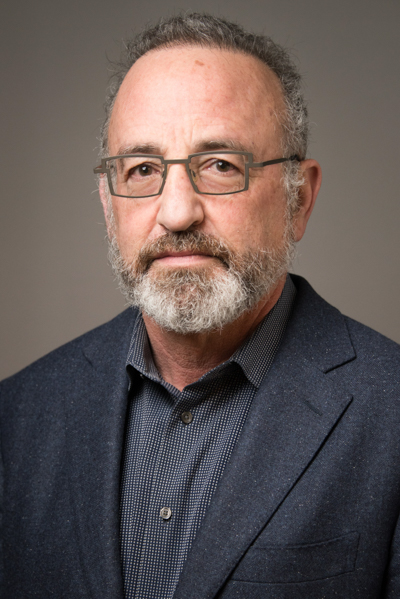
co-founder and
chief medical officer of 9+1AI
As the research behind 9+1AI began taking shape as a commercial opportunity, Davis and his colleagues recognized that they needed guidance on how to protect and license their intellectual property.
“We’ve been working on 9+1AI now for around two years, and we connected with the UT Research Foundation very early on,” Davis said.
The team approached UTRF’s Memphis Office with a straightforward question: “We’ve got a really valuable idea, now what do we do with it?”
“UTRF is very approachable and helpful,” Davis said. “The business side of forming a startup is not something I thrive in, but groups like UTRF have been very accommodating and helpful.”
Today, 9+1AI is moving the technology toward commercialization and is in the middle stages of seed fundraising.
Finding What the Eye Cannot See
An ECG captures the electrical activity of the heart at the surface of the skin. Although a standard 10-second recording may seem brief, it produces thousands of individual measurements that can be analyzed computationally.
“Now, a 10-second ECG provides a robust picture,” Davis said.
The challenge is determining what all of that information can reveal.
“This is the application of deep learning in medicine,” Davis said. “The technology utilizes neural networks, including convolutional neural networks and transformer models, to analyze ECGs and understand and see things that are not observable to the naked eye.”
Davis says the breakthrough came from combining artificial intelligence techniques with access to an enormous amount of clinical data.
“The real breakthrough was our ability to access and analyze millions upon millions of ECGs that are included in electronic medical record data,” Davis said. “This allowed us to create big enough models that accurately read the level of heart failure from an ECG.”
From ECG to Biomarker
Rather than simply identifying whether an ECG appears abnormal, the technology is designed to generate a numerical assessment of heart failure and estimate a patient’s B-type natriuretic peptide (BNP) level, a biomarker commonly used to assess heart failure.
Traditionally, measuring BNP requires a blood draw. Davis sees an opportunity to extract similar information from an ECG, potentially making monitoring more convenient and expanding where and how that information can be collected.
“There are a lot of reasons why people want to get their BNP measured, or maybe they should get their BNP measured, but it’s just a real pain, and maybe it doesn’t actually happen,” Davis said. “Now we’re able to actually do it from an ECG.”
The approach could eventually extend ECG-based analysis across a range of settings, from hospitals and emergency rooms to wearable or embedded devices.
“If somebody has a smartwatch, an embedded monitor, or is in the emergency room…any time an ECG is done, we can extract that information without the need for a blood draw,” Davis said. “Or we can actually identify who needs a blood draw to confirm what we’re finding.”
Another challenge was developing an approach that could work across ECG data collected from different systems and institutions.
“Coming up with an approach that allowed the algorithm to function regardless of where the data came from was another challenge,” Davis said. “But I think we’ve been successful in managing that.”
Turning ECG Data into Clinical Insight
For Davis, the goal is not simply to develop another way to analyze an ECG. It is to provide clinicians with information they can use to better understand their patients.
“We think that in the right hands, this is going to be a very powerful tool in helping doctors manage heart failure,” Davis said.
He envisions a future in which cardiologists can use the technology to better understand which patients may be at risk and how their condition is changing over time.
“The real metric is if this is taken up by cardiologists,” Davis said. “It helps you understand who’s at risk and who’s not, who’s getting better and who’s getting worse.”
Bringing that vision to reality requires more than developing an algorithm. It also means navigating intellectual property, business formation, fundraising, regulatory requirements and the many decisions involved in moving a technology from research toward the market.
UTRF has been a partner with Davis since the technology began moving toward commercialization. Initially, UTRF filed a patent application covering the new process and later worked with Wake Forest through an inter-institutional agreement to facilitate licensing the technology to 9+1AI.
“Dr. Davis has been an incredible partner to work with in licensing this technology,” said James Parrett, J.D., M.S., PharmD, vice president of UTRF’s Memphis Office. “He’s always had a clear vision of how to apply the technology to patients and has always focused on moving this forward through 9+1AI to make it a reality.”
For Davis, turning an idea into a clinical tool is ultimately about keeping that vision focused on patients.
“It takes a lot of focus to get one idea to fruition,” Davis said.
From a short ECG recording to millions of individual data points, 9+1AI is working to uncover information that may otherwise remain hidden and translate it into tools that can help clinicians make more informed decisions about patient care.