Canine vaccine for Staphylococcus pseudintermedius
The Problem
Staphylococcus pseudintermedius is the leading cause of skin infections in dogs. Its resistance to antibiotics has become widespread to the point that many strains are no longer susceptible to commonly used antimicrobials. Compounding this problem, the organism has evolved multiple virulence mechanisms that effectively allow it to suppress and evade its hosts’ immune responses.
The Solution
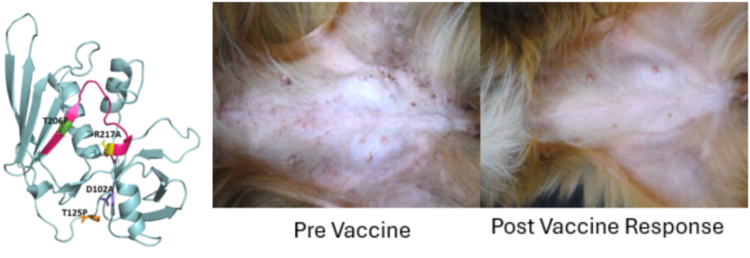
Researchers at the University of Tennessee have identified the virulence factors responsible for impaired immune responses to S. pseudintermedius infections. Their vaccine is composed of conserved, attenuated, nontoxic, immunogenic proteins produced from synthetic genes. The vaccine stimulates production of antibodies that inactivate toxic and immunosuppressive S. pseudintermedius virulence proteins and target surface-exposed antigens, providing a safe and effective vaccine.
Benefits
| Benefit |
|---|
| Novel patented vaccine formulation effective against antibiotic-resistant S. pseudintermedius. |
| Addresses a critical need to treat canine skin infections caused by multidrug-resistant S. pseudintermedius. |
More Information
- Rachel Valentine
- Assistant Technology Manager
- 865-974-4492 | rvalen18@tennessee.edu
- UTRF Reference ID: 17115
- Patent Status: US20200246446A1, US20210379173A1

Innovators
Stephen Kania

Professor, University of Tennessee College of Veterinary Medicine, UT Knoxville
Dr. Kania earned his PhD in veterinary infectious diseases from the University of Florida and joined the faculty of the University of Tennessee College of Veterinary Medicine in 1992. He studies the molecular epidemiology, virulence, and antimicrobial resistance of staphylococci of veterinary importance and development of vaccines to treat and prevent staphylococcal infections.
Dr. Kania earned his PhD in veterinary infectious diseases from the University of Florida and joined the facul...
Mohamed Abouelkhair

Associate Professor, Shreiber School of Veterinary Medicine, Rowan University
Dr. Mohamed Abouelkhair, an associate professor at Shreiber School of Veterinary Medicine in Rowan University, New Jersey, holds board certification in veterinary virology and immunology. His research focuses on exploring host immunity to microbial pathogens using cutting-edge omics technologies, including genomics, proteomics, and recently, metabolomics, and advanced CRISPR genome editing.
Dr. Mohamed Abouelkhair, an associate professor at Shreiber School of Veterinary Medicine in Rowan University,...