Completely Implanted Endoprosthetic Limb
The Problem
Limb amputation causes severe, extensive sensorimotor impairment. An externally worn limb prosthesis is the standard means to restore part of the missing limb’s function. Unfortunately, according to recent surveys of amputees, limb prostheses still do not move or feel like the biological intact limb. Consequently, as many as 45% and 35% of users of body-powered and motorized prostheses, respectively, eventually abandon their prosthesis.
The Solution
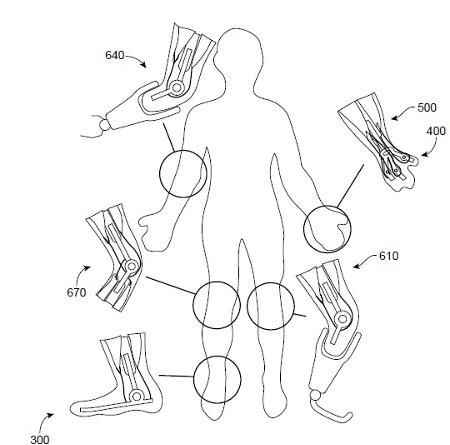
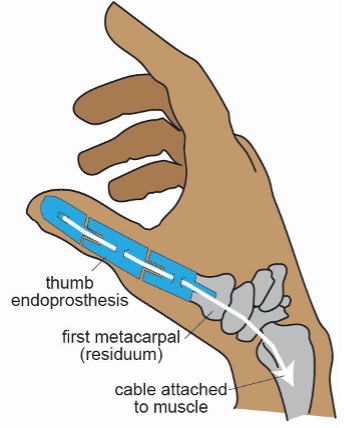
Researchers at The University of Tennessee have developed a fully implanted prosthetic limb that is inserted into the residual bone, which contains one or more joints to allow movement, and has attachment points for tendons to allow for muscle-control of the prosthesis. This device is completely enclosed within the skin and could restore more natural control and sensation of movement than advanced external prostheses. It would alleviate many of the functional and comfort-related drawbacks leading to prosthesis abandonment.
Benefits
| Benefit |
|---|
| Promising in vivo data with both jointed and non-jointed devices. |
| Muscle-controlled prosthesis requires no reliance on external power supplies or batteries. |
| Potential increase in the restoration of sensorimotor function compared to external prosthesis. |
| Endoprosthesis permits realistic anatomy reconstruction. |
| Can be utilized in a variety of locations, including the thumb, finger, and ankle. |
More Information
- Gregory Sechrist
- Technology Manager
- 865-974-1669 | gsechris@tennessee.edu
- UTRF Reference ID: 19064
- Patent Status: Patent Pending

Innovators
Dustin Crouch
Assistant Professor in Biomedical Engineering, UT Knoxville
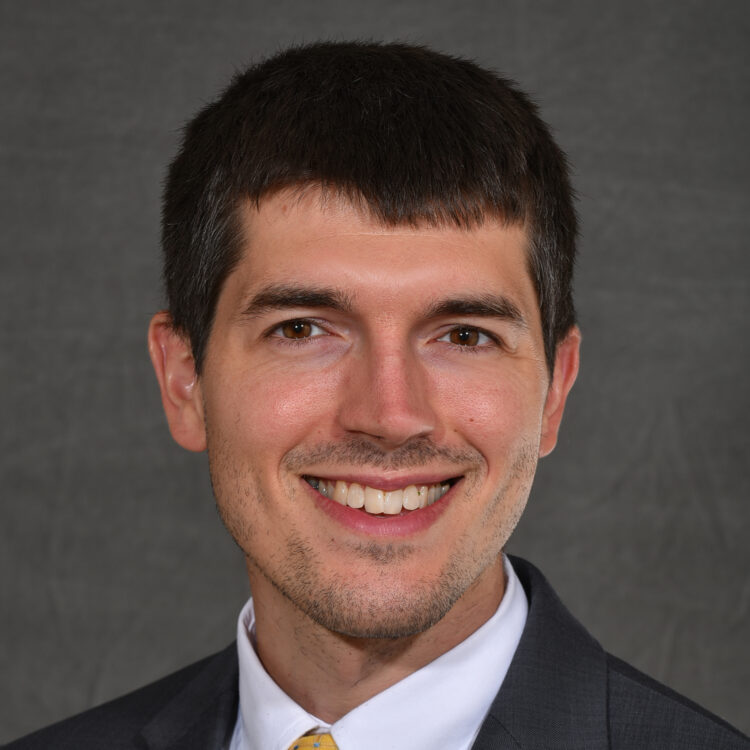
Dr. Crouch focuses his research on musculoskeletal biomechanics and neuromuscular coordination, physical integration of limb prostheses with the biological residual limb, computer biomechanical models and simulations, and wearable devices for movement assistance.
Dr. Crouch focuses his research on musculoskeletal biomechanics and neuromuscular coordination, physical integ...
David Anderson
Associate Dean for Research and Graduate Studies and Professor of Large Animal Surgery, UT College of Veterinary Medicine
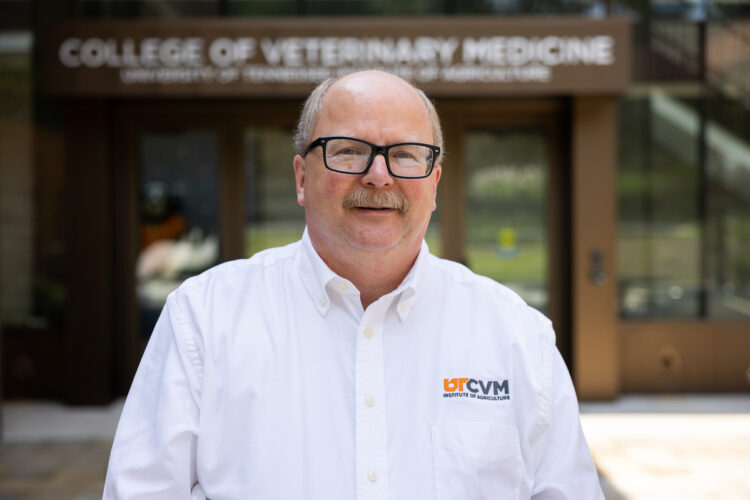
I serve faculty, staff, and graduate students by helping them find opportunities to pursue their interests in research and discovery. My goal is to support programs that make a difference for the good of animals and society and to help people achieve their potential as the pursue their passions. My main research focus has been in the area of orthopedics, medical devices, and the integration of ...
I serve faculty, staff, and graduate students by helping them find opportunities to pursue their interests in ...
Stacy Stephenson
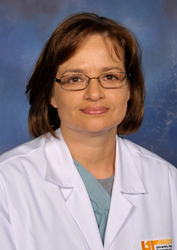
Assistant Professor, Department of Surgery, Division of Plastic & Reconstructive Surgery Research, UT College of Medicine
Dr. Stephenson serves as a cosmetic and reconstructive surgeon and physician at the University of Tennessee Medical Center. The Laboratory of Regenerative Medicine focuses on novel approaches for re-growing bone and nerves that have been damaged due to injury. Drs. Stephenson and Masi are particularly interested in healing bone and nerve damage in the arms and legs using carbon-based nanomaterial...
Dr. Stephenson serves as a cosmetic and reconstructive surgeon and physician at the University of Tennessee Me...