Description
Brachycephalic (short-nosed) animals often suffer from brachycephalic obstructive airway syndrome (BOAS). Because of this, the animals have difficulty breathing and require surgery. Ala vestibuloplasty, an advanced surgical procedure, is gaining favor because it addresses deeper internal blockages associated with BOAS and greatly increases airflow through the nasal vestibule by removing obstructive anatomic structures. This leads to an improved quality of life for the patient. Because of the increase in popularity, training surgical residents and surgeons alike is highly important to ensure the best outcomes for affected animals.
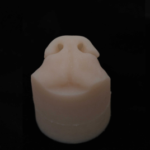
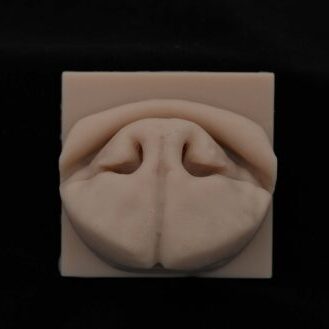
Researchers at the University of Tennessee have created a silicone surgical training model to train surgical residents and surgeons on the ala vestibuloplasty procedure commonly performed in veterinary brachycepahlic patients. The unique anatomic replication of common canine breeds that require additional alar fold and wedge resections provides safe and accurate training.
Benefits
- Provides unique anatomic replication of commonly affected canine breeds
- Silicone model allows easier, but lifelike training without a need for cadaver or live-animal labs
- More affordable than other training methods
Please contact Tyler Newton (cnewto12@tennessee.edu) for bulk order pricing.